Signal Context Action Inside a Social Trading Platform
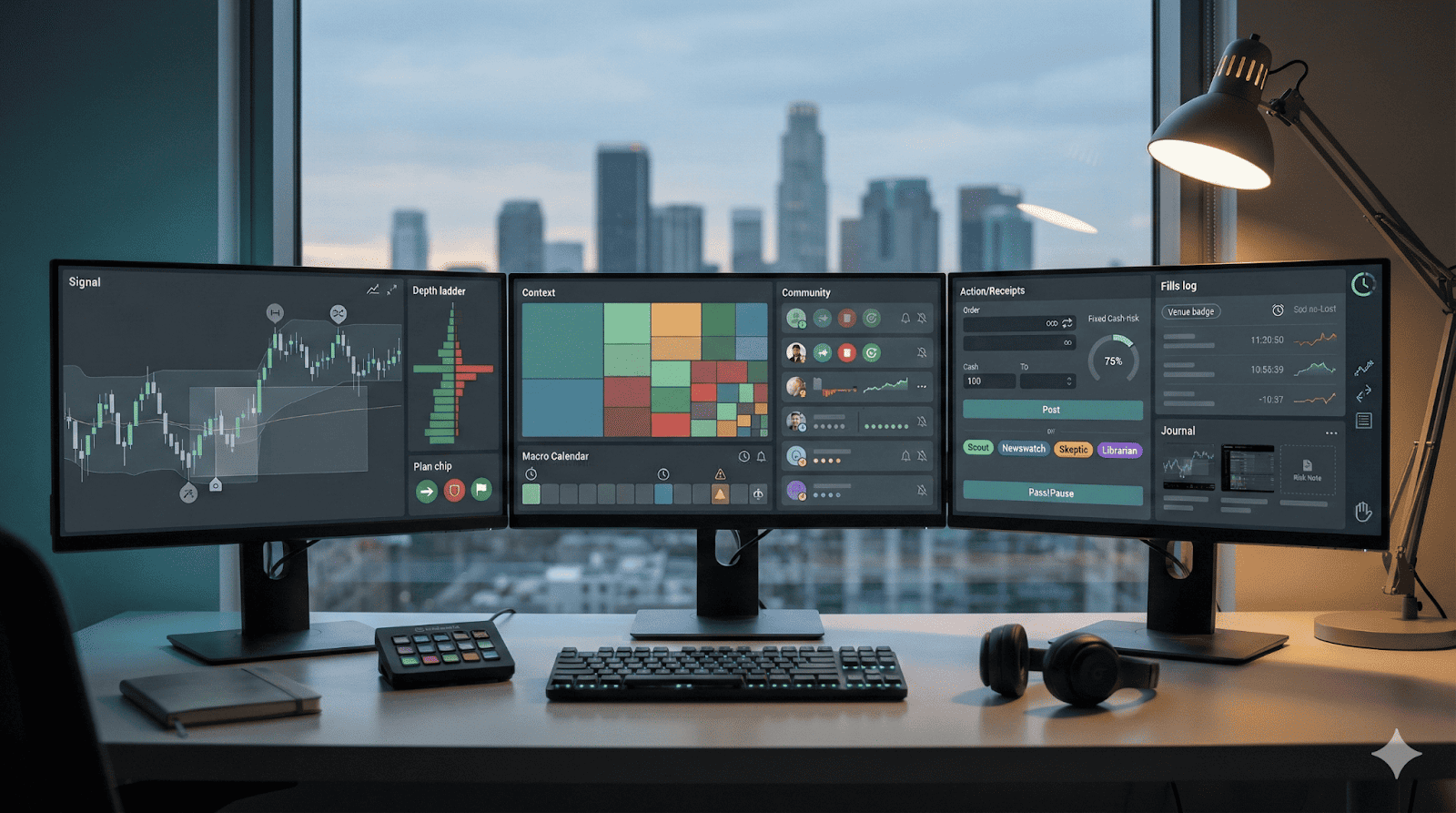
The opening is minutes away. Chat scrolls, charts twitch, and every idea feels urgent. A good social trading platform makes that noise useful by giving you three things in the same place: signal you can test, context you can trust, and actions you can execute without drama.
“A post becomes a plan only when it names the level, the stop, and the first target.”
What a healthy platform actually does
| Pillar | What you should see | Why it matters |
| Session framing | Pre market levels, catalysts, a simple scenario map | You start from structure, not mood |
| One line trade plans | Entry, stop, first target in a single sentence | Decisions are testable and comparable |
| Receipts after action | Timestamps, fills, slippage notes | Learning survives the close |
| Culture of restraint | Passing is normal when structure is messy | Fewer impulse trades, calmer stats |
“Process beats prediction when volatility shows up.”
Where technical analysis in trading fits the flow
You do not need ten indicators. You need a common language the community can read in seconds.
- Mark prior day high and low, opening range, and one midline like VWAP
- Choose one setup per idea: break and retest or mean reversion
- Size in cash first, then translate to shares or contracts
Tiny TA toolkit that travels across assets
| Tool | Use it for | Mistake to avoid |
| Levels and ranges | Binary decisions at obvious places | Drawing fresh lines every five minutes |
| Moving average as context | Pace and slope, not signals by themselves | Treating every cross as a must trade |
| Volume clusters | Where price paused with participation | Ignoring time of day effects |
“Charts suggest where. Your rules decide if and how much.”
Turning community into execution
A strong stock trading community pairs human judgment with platform mechanics so you can move from chatter to ticket without losing discipline.
- Curate three voices who always post level, stop, target
- Dock the community pane next to your watchlist, not over your ticket
- Save a one click plan macro: “Long above 142.10, SL 141.50, TP 143.10, risk 50 dollars”
Clean handoff from post to order
- Read the one line plan
- Check your levels match the post
- Send with brackets attached, then log spread at entry and slippage on exit
Intraday rhythm that keeps you honest
- First 15 minutes: smaller size, only pre planned levels
- Mid session: let setups mature, avoid chasing spikes
- Last hour: return to smaller size, exits are mechanical not heroic
“Your edge is not the entry, it is the way you leave.”
Feature checklist before you commit to a platform
| Question | Keep if “yes” |
| Are trade ideas formatted as one line plans by default | Yes |
| Can I attach OCO brackets to every order with one click | Yes |
| Do fills show venue, time, and slippage so debriefs are real | Yes |
| Can I mute channels that lack plan format without leaving the room | Yes |
| Does the journal auto save screenshots and notes | Yes |
Example micro workflow you can start today
- Build a short list each Sunday and tag two catalysts per name
- During the week, take one setup per name only after a retest of your level
- Journal three numbers for every trade: entry spread, exit slippage, heat against stop
- Adjust size only after ten sessions when your notebook, not your mood, says so
Bringing it together
If this lens fits, keep your platform simple: one decision screen, one context screen, one journal screen. Let the social trading platform surface the best ideas, let technical analysis in trading define the where, and let your rules decide the if and how much. Add a small, curated stock trading community panel for clarity, not noise.
Before the questions, a quick nudge to move now: write one page with your setup, your cash risk per trade, and two events that force a pause for the week. Use that page for seven sessions. If your notes feel lighter and your decisions faster, you are on the right track.
FAQ
Is a social platform the same as copy trading
No. A social feed shares context and plans. You still choose entries, size, and exits. Copy features exist on some platforms, but they are optional and should include clear risk controls.
Do I need advanced indicators to keep up
Not at first. Levels, ranges, and one midline give most of the signal you need. Add tools only when your journal shows a consistent gap that a tool can fill.
How do I avoid overtrading in a busy community
Mute channels without plan format, cap daily cash risk, and limit yourself to one setup per name. Restraint earns more than adrenaline.
Can beginners thrive in a pro room
Yes, if leaders publish losses beside wins, use the same one line plan, and provide a starter pack with examples new members can copy without guessing.

Disclaimer: No investment advice provided. Any opinions, conversations, messages, news, research, analysis, prices, or other information contained on this website are provided solely for general market information, educational, and entertainment purposes. They do not constitute investment advice. This website should not be considered a substitute for independent and thorough market research before making actual investment or trading decisions.
Opinions, market data, recommendations, or any other content are subject to change at any time without notice. TradeGATEhub will not accept liability for any loss or damage, including, but not limited to, any loss of profits, that may arise directly or indirectly from the use of or reliance on such information.
We do not recommend using technical analysis as the sole method for making trading decisions. We do not recommend making impulsive trading decisions. You should always understand that PAST PERFORMANCE IS NOT NECESSARILY INDICATIVE OF FUTURE RESULTS.